Koreanculture 563

Korean Traditional Game : Dukkebi-jip Jitgi

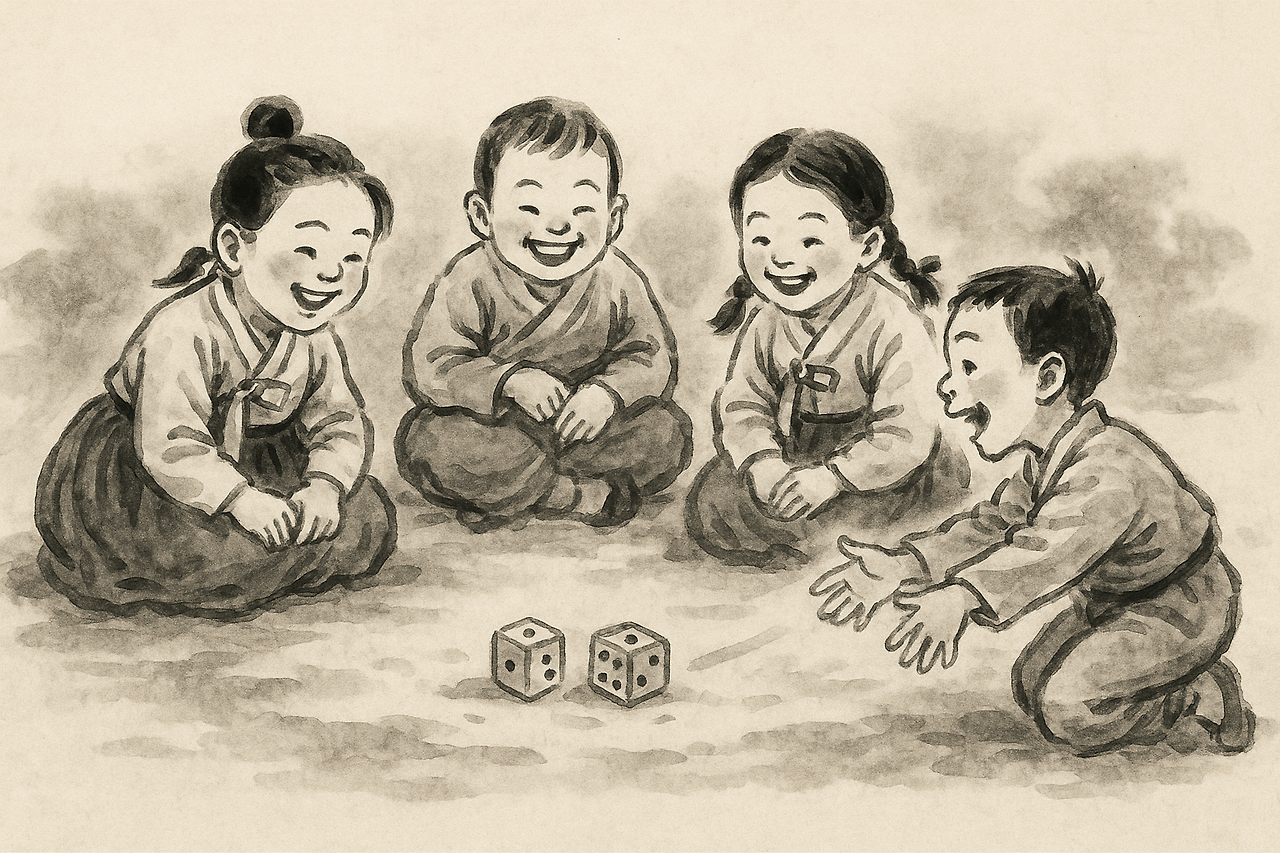
🏠 Korean Traditional Game Series 62 Dukkebi-jip Jitgi(두꺼비집짓기 · Korean Mud House Building Play)🕰️ 1. IntroductionDukkebi-jip Jitgi (두꺼비집짓기), or Mud House Building Play, is a nostalgic Korean children’s game where kids build small houses using dirt, water, and imagination.The “dukkebi-jip” (toad house) refers to a rounded mud structure, often shaped like a tiny dome or mound, resembling a toad’s..

카테고리 없음 2026.03.20

Stories of Koreas National Treasures : Celadon Ewer in the Shape of a Fish-Dragon

Stories of Koreas National Treasures 62Photo Credit : Cultural Heritage Administration of KoreaCeladon Ewer in the Shape of a Fish-Dragon(Goryeo Dynasty)🏯 1. A Vessel Born from ImaginationAmong the most imaginative creations of Goryeo celadon, the Celadon Ewer in the Shape of a Fish-Dragon (Eoryong) stands as a striking fusion of myth and craftsmanship.Created during the Goryeo Dynasty (12th ce..

한국 속담 : 상전 배 부르면 종 배고픈 줄 모른다

한국 속담 208편상전 배 부르면 종 배고픈 줄 모른다🔍 속담의 뜻지위가 높거나 형편이 넉넉한 사람은 어려운 사람이나 아랫사람의 사정을 제대로 알지 못한다는 뜻입니다. 자신이 부족함 없이 살고 있으면 타인의 배고픔이나 고통을 쉽게 이해하지 못한다는 의미를 담고 있습니다.🌱 속담에 담긴 의미이 속담은 옛 신분 사회에서 비롯되었습니다. ‘상전’은 늘 먹고 사는 데 부족함이 없는 주인을, ‘종’은 그 아래에서 힘들게 일하며 살아가던 사람을 뜻합니다. 상전은 배부른 삶을 살았기 때문에 종이 느끼는 배고픔과 고단함을 깊이 공감하기 어려웠습니다. 하지만 이 속담이 전하는 진짜 메시지는 단순한 신분 이야기가 아닙니다. 👉 사람은 누구나 자신이 서 있는 위치에서 세상을 바라본다는 사실을 말해줍니다.🧩 삶의 예시..

Korean Proverb : If Things Go Wrong People Blame Their Ancestors

Korean Proverb Series 90If Things Go Wrong, People Blame Their Ancestors“안 되면 조상 탓 된다”(An doemyeon josang tat doenda)🕰️ 1. The Proverb’s Core MeaningThe Korean proverb “안 되면 조상 탓 된다” literally means“If something doesn’t work out, people blame their ancestors.”It humorously criticizes the human tendencyto shift responsibility away from oneself when things go wrong.Instead of acknowledging mistak..

Korean Folktale : The Wolf and the Third Child

🐺 Korean Folktale Series 90 The Wolf and the Third Child(늑대와 셋째 아이·Neukdae-wa Setjjae Ai)🕰️ 1. The StoryLong ago, in a village nestled between thick forests and wide fields, there lived a poor family with three children. The eldest was strong, the second clever, and the youngest—often called simply the third child—was quiet and thoughtful.Because the youngest spoke little, many villagers beli..

Korean Traditional Game : kot Chajgi Nori

🌸 Korean Traditional Game Series 61 Kkot Chajgi Nori(꽃찾기놀이 · Korean Flower Finding Game)🕰️ 1. IntroductionKkot Chajgi Nori (꽃찾기놀이), or Flower Finding Game, is a gentle and joyful Korean children’s play that celebrates curiosity and nature.Traditionally played in fields, gardens, or village paths during spring and summer, the game encourages children to observe flowers, colors, and scents while..

Stories of Koreas National Treasures : Celadon Incense Burner with Lion-shaped Lid

Stories of Korea’s National Treasures 61Photo Credit : Cultural Heritage Administration of KoreaCeladon Incense Burner with Lion-shaped Lid(Goryeo Dynasty)🏯 1. A Vessel of Fragrance and SymbolAmong the masterpieces of Goryeo celadon, the Celadon Incense Burner with Lion-shaped Lid stands out for its graceful balance between sculpture and pottery.Created during the Goryeo Dynasty (12th century),..

Korean Proverb : Enemies Meet on a Narrow Bridge

Korean Proverb Series 89Enemies Meet on a Narrow Bridge“원수는 외나무다리에서 만난다”(Wonsu-neun oenamudari-eseo mannanda)🕰️ 1. The Proverb’s Core MeaningThe Korean proverb “원수는 외나무다리에서 만난다” literally means“Enemies meet on a narrow wooden bridge.”It expresses the idea that even if you try to avoid someone you dislike,fate may eventually bring you face to face —often in a situation where neither can escape.A..

Korean Folktale : The Moon Goddess of the Lunar Palace

🌙 Korean Folktale Series 89 “The Moon Goddess of the Lunar Palace”(달의 여신, 월궁선녀 · Dal-ui Yeosin, Wolgung Seonnyeo)🕰️ 1. The StoryLong ago, when the night sky seemed closer to the earth, people believed that the moon was not an empty sphere of light—but a radiant palace known as the Wolgung, the Lunar Palace.In that shining realm lived the Moon Goddess, a celestial maiden called Wolgung Seonnyeo..

Korean Traditional Game : Bangaekkaebi Nori

🦗 Korean Traditional Game Series 60 Bangaekkaebi Nori(방아깨비놀이 · Korean Grasshopper Play)🕰️ 1. IntroductionBangaekkaebi Nori (방아깨비놀이) is a lively Korean traditional children’s game inspired by the bangaekkaebi—the grasshopper.In rural Korea, children often played in fields and rice paddies where grasshoppers leapt energetically among crops. Their springing movement became the model for a playful..