Stories of Korea’s National Treasures 71
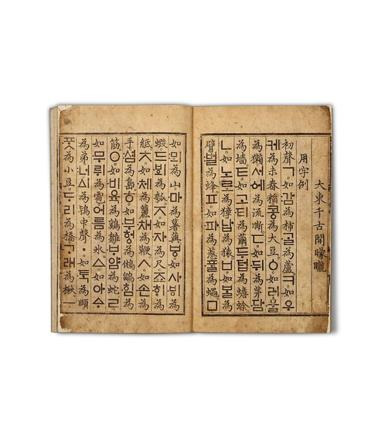
Photo Credit : Cultural Heritage Administration of Korea
Hunminjeongeum
(Joseon Dynasty, 1446)
🏯 1. A Script Created for the People
In the 15th century, King Sejong the Great accomplished something extraordinary — he created a completely new writing system so that ordinary people could read and write with ease.
Until then, most official documents were written in Classical Chinese, making literacy difficult for common people.
To solve this problem, King Sejong introduced Hunminjeongeum, meaning "The Proper Sounds for the Instruction of the People."
More than an alphabet, it was a gift of knowledge, equality, and communication.
🪨 2. A Scientific Writing System
Hunminjeongeum originally consisted of 28 letters, carefully designed according to scientific principles.
The consonants were shaped after the positions of the speech organs when producing sounds, while the vowels were based on the philosophical concepts of Heaven, Earth, and Humanity.
This systematic design makes Hangul one of the few writing systems in the world whose creator, purpose, and method of construction are all clearly documented.
The original text not only introduces the letters but also explains why and how they were created, making it a remarkable achievement in both linguistics and education.
🌄 3. A Revolution in Communication
Hunminjeongeum transformed Korean society by making literacy accessible to everyone.
For the first time, farmers, merchants, women, and ordinary citizens could express their thoughts in writing without years of studying Classical Chinese.
The document reflects King Sejong's belief that knowledge should belong to all people, not only to scholars or officials.
Its influence extends far beyond Korea.
Today, linguists around the world admire Hangul as one of the most logical and efficient writing systems ever devised.
🌿 4. Preservation and Global Legacy
The Hunminjeongeum is not only Korea's most treasured linguistic heritage but also one of humanity's greatest cultural achievements.
Designated National Treasure No. 71, it was also inscribed on the UNESCO Memory of the World Programme Register in 1997 in recognition of its outstanding universal value.
More than 570 years after its creation, it continues to unite generations through language, education, and culture.
Its legacy reminds us that the greatest inventions are those that empower every person to learn, communicate, and dream.
💬 5. A Warm Reflection
“Some treasures are built with stone. Some are cast in gold.
But this treasure was built with letters giving every voice the chance to be heard.”
📌 Notice
The National Treasure number indicates the order of designation, not a ranking of value.
For more information, please visit the 👉 National Heritage Portal.
More Stories of Korea’s National Treasures
Discover more national treasures of Korea here.