🌾 Korean Traditional Game Series 58
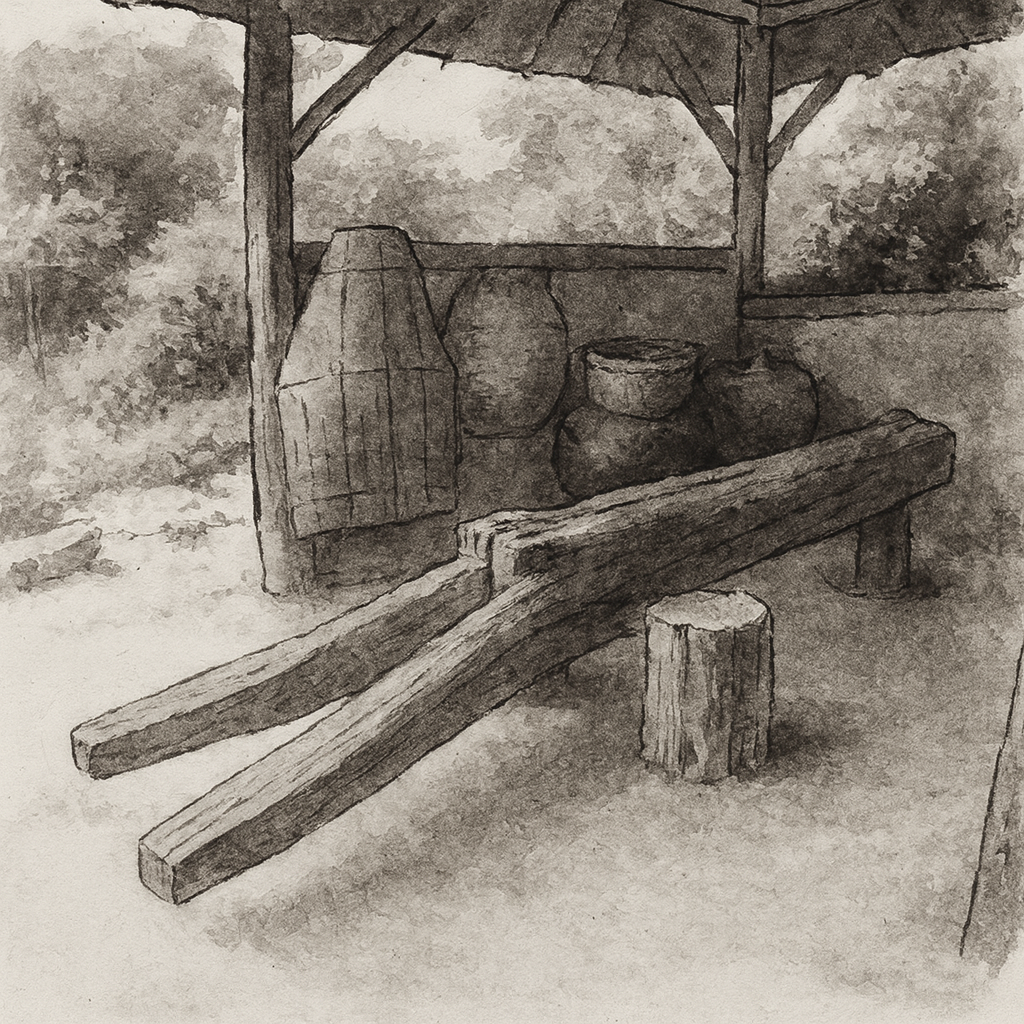
Didilbanga Nori
(디딜방아놀이 · Korean Treadle Mortar Play)
🕰️ 1. Introduction
Didilbanga Nori (디딜방아놀이) is a traditional Korean folk play inspired by the didilbanga—a foot-powered wooden mortar once used to pound grains such as rice and millet.
In agrarian villages, the rhythmic motion of the treadle was a familiar sound of daily life. Over time, this labor transformed into play, music, and communal joy.
More than a game, Didilbanga Nori reflects Korea’s ability to turn work into celebration—where cooperation, rhythm, and shared effort mattered most.
🪄 2. How to Play and Perform
- Setting the didilbanga:
A wooden treadle mortar is placed in an open yard. One end is stepped on to lift the pestle; releasing it lets the pestle drop into the mortar. - Assigning roles:
Players take turns stepping on the treadle. Others may clap, sing, or keep rhythm with simple percussion. - Creating rhythm:
As the pestle rises and falls, players chant work songs or folk verses, syncing steps to beats.
Coordination is key—steady rhythm keeps the motion smooth and safe. - Turning work into play:
The activity often ends with laughter, teasing, and shared snacks, celebrating both effort and togetherness.
👀 3. Example from Life
In a village yard at harvest time, children gather around the wooden mortar.
One steps down—thud—the pestle drops. Another follows, matching the beat.
Soon, clapping and singing fill the air, and even elders smile at the familiar rhythm.
What once fed families becomes a playful lesson in timing, teamwork, and joy—proof that community grows strongest when people move together.
🌏 4. Similar Traditions Around the World
- China: Foot-powered grain pounding accompanied by work songs.
- India: Treadle and mortar activities turned into rhythmic communal tasks.
- Europe: Traditional grain processing with synchronized steps and chants.
Across cultures, rhythmic labor becomes play—binding people through shared motion and sound.
💌 Closing Words
Didilbanga Nori teaches that dignity and joy can live in the same movement.
Through steady steps and shared rhythm, a simple tool becomes a celebration of cooperation.
It reminds us that when people work—and play—together, even the hardest tasks can feel light.
📌 Note
This is a creative cultural content from the Misojieum Story Blog (kor-telling.com).
Please do not copy without permission.
Sharing is welcome with proper source citation.
Explore more traditional Korean games and folk play here.
'Korean Traditional Games' 카테고리의 다른 글
| Korean Traditional Game : Dukkebi-jip Jitgi (0) | 2026.03.20 |
|---|---|
| Korean Traditional Game : kot Chajgi Nori (0) | 2026.03.08 |
| Korean Traditional Game : Bangaekkaebi Nori (0) | 2026.02.26 |
| Korean Traditional Game : Maetdol Nori (0) | 2026.02.09 |
| Korean Traditional Game : Tujeon (0) | 2026.01.19 |
| Korean Traditional Game : Sogup Nori (0) | 2026.01.12 |
| Korean Traditional Game : Korean Dragon Play (0) | 2026.01.04 |
| Korean Traditional Game : San-gaji Nori (0) | 2025.12.27 |